c. 1518 CE – 1683 CE
Kingdom of Ndongo and Matamba
which preceded Portuguese rule
Date range and summary are drafted from Wikidata pending a scholarly-source verification pass — treat as approximate, not settled fact, until re-sourced from academic historians/archaeologists.
Overview
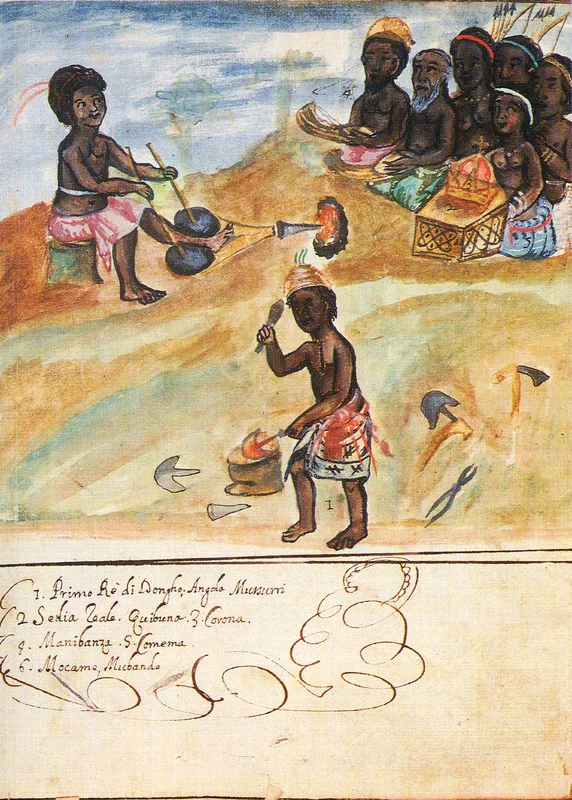
The Kingdom of Ndongo was an early-modern African state in the highlands between the Lukala and Kwanza Rivers, in what is now Angola, first recorded in the 16th century as a vassal state of the larger Kingdom of Kongo, though Ndongo was the most powerful of Kongo’s vassals, ruled by its own king known as the Ngola — a title that gave the modern nation of Angola its name. Ndongo’s government was a sophisticated hierarchy: the Ngola ruled through provincial nobles called sobas, supported by a chief advisor known as the tendala, a military commander called the ngolambole, and a class of palace bureaucrats, the makotas, who managed everything from religious affairs to taxation.
War with Portugal and the Rise of Queen Nzinga
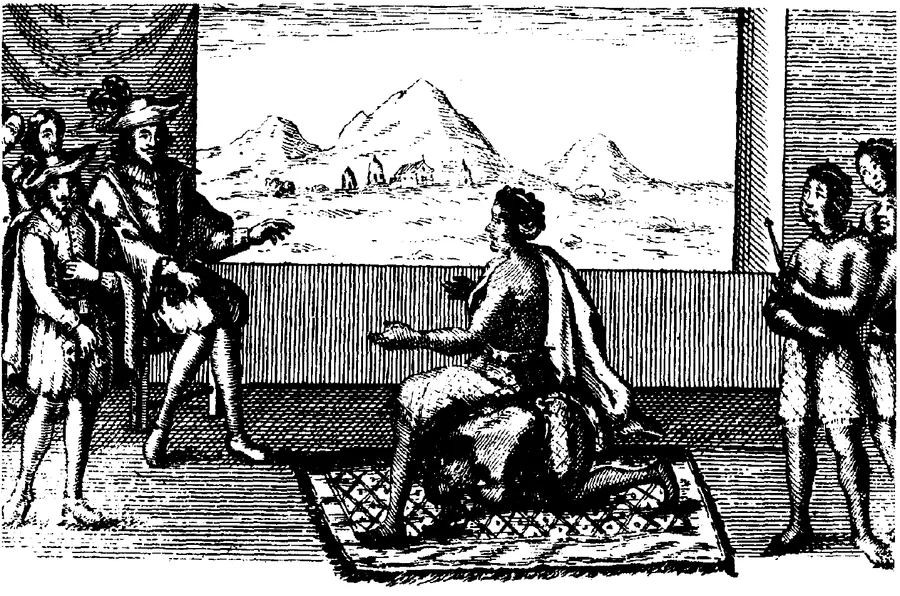
Portuguese colonizers invaded Ndongo repeatedly in the early 17th century, sacking its capital in 1617 with the help of Imbangala mercenary bands and forcing the Ngola to take refuge on the Kindonga Islands in the Kwanza River. In 1621, the Ngola’s sister, Nzinga Mbandi, was sent to Luanda to negotiate peace with the Portuguese — the opening chapter of what would become one of the most remarkable political careers in African history. When her brother died by suicide after Portugal broke its treaty, Nzinga took the throne as ruling queen and spent decades leading sustained, resourceful resistance against Portuguese colonization, at one point escaping capture by descending into a valley on ropes with only a few hundred followers remaining, and rebuilding her army through a hard-won alliance with the Imbangala leader Kasanje.
Matamba and Nzinga’s Enduring Legacy
Rather than accept defeat, Nzinga moved her base of power north and conquered the Kingdom of Matamba, ruling it as an independent state and continuing to contest Portuguese expansion for decades — even negotiating a separate peace with Portugal in 1639 while Ndongo itself remained under a rival, Portuguese-allied dynasty. Nzinga’s decades-long resistance, her political skill in playing Portuguese, Dutch, and Imbangala interests against one another, and her refusal to accept colonization on any terms but her own have made her one of the most celebrated figures in the history of African resistance to European colonization — a legacy honored today with monuments and national recognition in Angola, and one directly relevant to this site’s mission of centering the agency and strength of African rulers who fought colonization rather than simply enduring it.
Related
- Aksum Empire
- Kingdom of Benin
- Kingdom of Buganda
- Kingdom of Burundi
- Kingdom of Dahomey
- Ethiopian Empire (Solomonic Dynasty)
More in Civil Rights, Politics, Military