c. 40 BCE – 960 CE
Aksum Empire
trading nation in the area of Eritrea and Northern Ethiopia
Date range and summary are drafted from Wikidata pending a scholarly-source verification pass — treat as approximate, not settled fact, until re-sourced from academic historians/archaeologists.
Overview
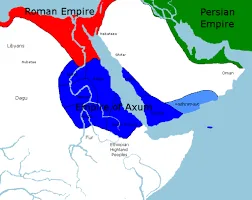
The Kingdom of Aksum was a major power of the ancient world, ruling the Horn of Africa and reaching across the Red Sea into South Arabia from the 1st century CE through the Middle Ages, centered on the city of Axum in what is now northern Ethiopia and Eritrea. Emerging from the earlier Dʿmt civilization, Aksum grew rich and powerful enough that the Persian prophet Mani, writing in the 3rd century, named it one of the four great powers of the world — alongside Persia, Rome, and China. That ranking was not flattery: Aksum’s location on the Red Sea gave it a central role in trade linking Rome and India, and its rulers built one of Africa’s most consequential ancient states on the strength of that position.
A Red Sea Trading and Naval Power
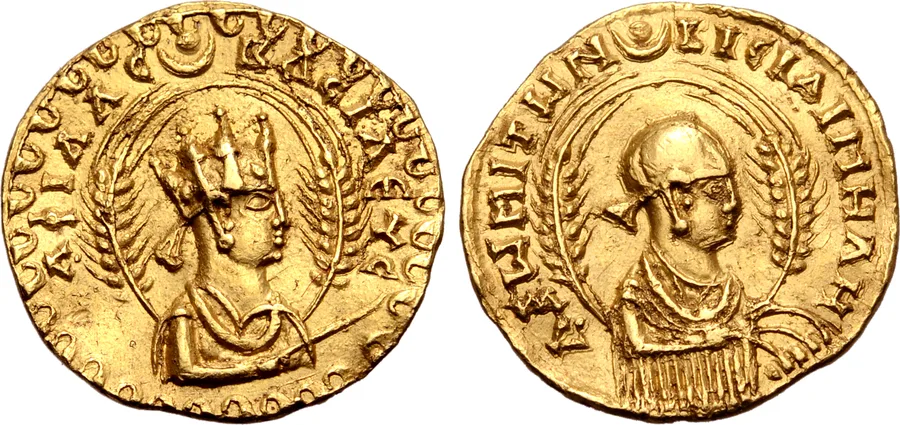
Aksum’s kings expanded steadily into South Arabia beginning with King Gedara in the early 3rd century, taking territory across the Tihama and Najran regions of modern Yemen before regional rivals pushed them back. By the reign of King Endybis around 270–310 CE, Aksum was minting its own gold, silver, and bronze coinage — a mark of serious economic sophistication achieved by very few states anywhere in the ancient world — and Aksumite coins have been recovered as far away as Caesarea and southern India, direct physical evidence of the kingdom’s reach as a maritime trading power.
An Early Christian State
Aksum’s Red Sea and Mediterranean trade ties brought it into the Greco-Roman cultural world, and under King Ezana in the mid-4th century CE, Aksum adopted Christianity as its state religion — making it one of the very first states anywhere on Earth to do so, decades before Rome itself. Ezana’s reign also brought Aksum’s conquest of Meroë, the former capital of the Kingdom of Kush, in 330 CE, and from that conquest Aksum inherited the old Greek name for the region, “Ethiopia.” Aksumite Christianity, expressed through soaring carved stone stelae and, later, rock-hewn churches, remains a living tradition in Ethiopia and Eritrea today.
Height of Power and Lasting Influence
Aksum reached its greatest territorial extent, roughly 2.5 million square kilometers, under King Kaleb in the 6th century CE, when he invaded the Himyarite Kingdom in Yemen at the request of the Byzantine emperor to stop the persecution of Christians there — a rare instance of an African power intervening militarily across the Red Sea in defense of a religious minority. Though Aksum’s Arabian holdings were later lost, the kingdom endured as a major regional civilization for centuries more. Its legacy is written directly into the modern world: Aksum’s architecture, its ancient Ge’ez script and liturgical language, and its Christian tradition remain foundational to Ethiopian and Eritrean identity today, making it one of the most continuously influential civilizations to have emerged anywhere in Africa.