Civil Rights Movement
Martin Luther King, Jr. National Historical Park
heritage site in Atlanta, Georgia, USA
Overview
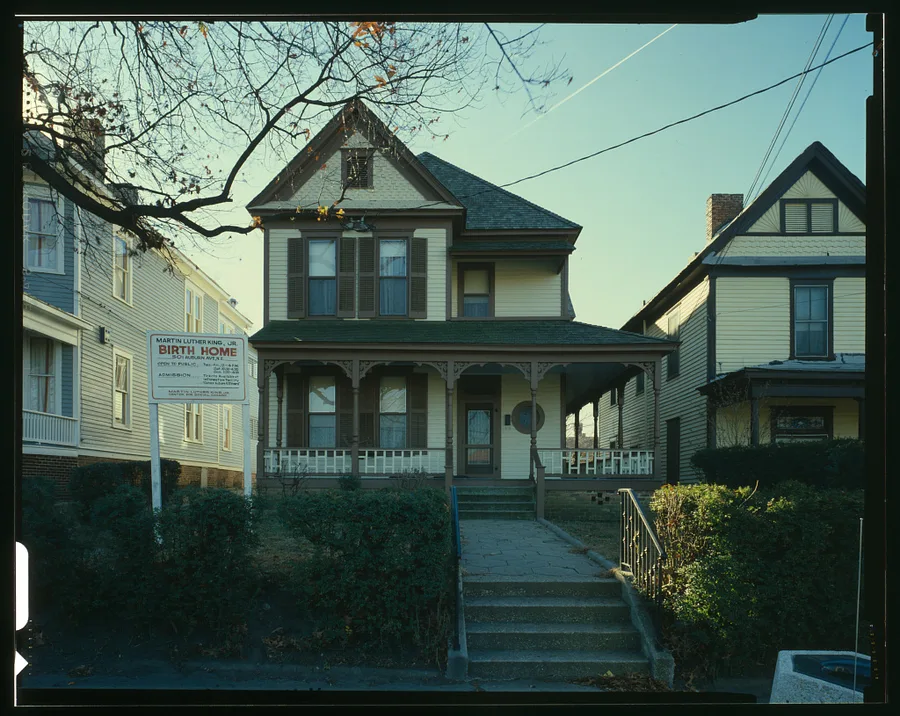
The Martin Luther King Jr. National Historical Park spans roughly 35 acres in Atlanta, Georgia, gathering the central physical sites of King’s life and legacy into a single National Park Service unit: his boyhood home, Ebenezer Baptist Church — where he was baptized and later served as co-pastor with his father — and the memorial tombs of King and his wife, civil rights activist Coretta Scott King. These sites were first protected under National Historic Site and National Historic Landmark designations beginning October 10, 1980, before being expanded and redesignated a full national historical park in 2018.
A Bipartisan Legacy, Championed by John Lewis
The park’s 2018 upgrade to full national historical park status came through legislation long championed by Congressman and fellow civil rights leader John Lewis, signed into law on January 8, 2018 — a direct, documented instance of one generation of civil rights leadership securing permanent federal recognition for the legacy of another. The park’s visitor center houses a museum chronicling the American Civil Rights Movement, while the King Center for Nonviolent Social Change contains the burial place of King and Coretta Scott King, and a restored 1894 firehouse that served Atlanta’s historic Sweet Auburn community until 1991 now houses an exhibit on desegregation within the Atlanta Fire Department.
Preserving an Entire Neighborhood
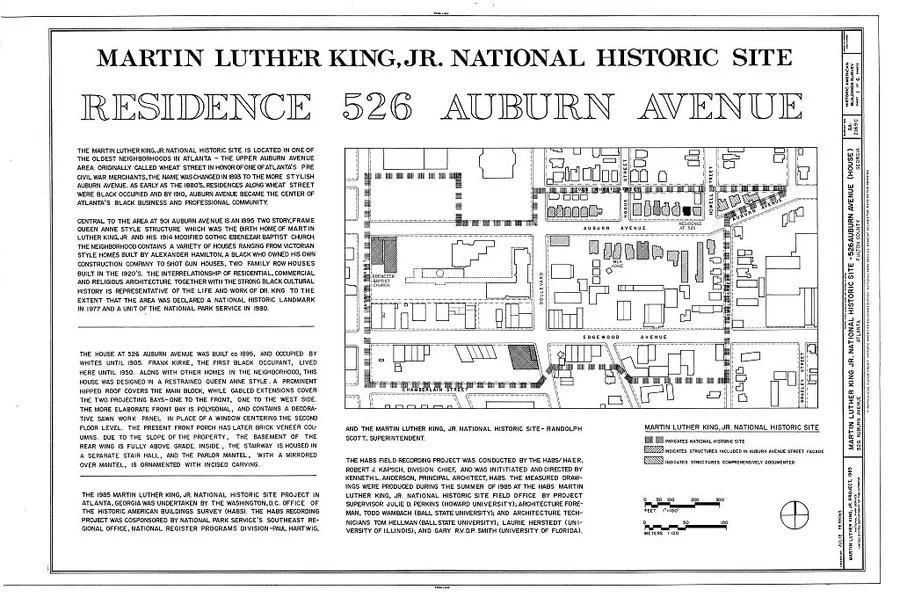
The park’s roots trace to the Martin Luther King Jr. Historic District’s 1974 listing on the National Register of Historic Places, an area bounded by Irwin, Randolph, Edgewood, Jackson, and Auburn Avenues that includes Ebenezer Baptist Church, King’s granite memorial tomb, his birthplace, and the shotgun and Victorian houses of the surrounding Sweet Auburn community; the district gained full National Historic Landmark status in 1977. The Trust for Public Land spent the following decades incrementally purchasing historic properties along Auburn Avenue, including houses on the very block where King grew up, to build both a pedestrian greenway connecting the district to the Jimmy Carter Presidential Center and a permanent buffer against further neighborhood decay.
Legacy
The park also includes the “I Have a Dream” International World Peace Rose Garden, a memorial tribute to Mohandas K. Gandhi reflecting King’s own debt to Gandhian nonviolent philosophy, and the International Civil Rights Walk of Fame, honoring pioneers of the broader social justice movement King was part of. In 2019, the National Park Foundation further expanded the site’s holdings by purchasing King’s childhood home directly, ensuring the physical spaces that shaped one of the Civil Rights Movement’s central leaders remain permanently preserved and open to the public.
Related
- Bayard Rustin
- Fannie Lou Hamer
- Martin Luther King Jr.
- Rosa Parks
- Thurgood Marshall
- Brown v. Board of Education National Historical Park
More in Civil Rights, Religion