Pre-Civil War / Civil War
Fort Monroe National Monument
former military installation in Hampton, Virginia, United States
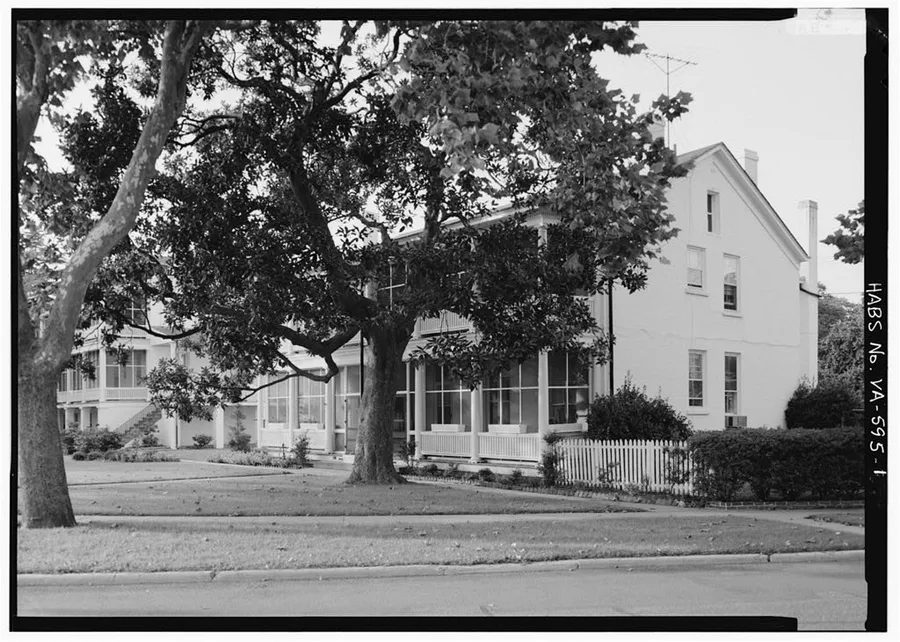
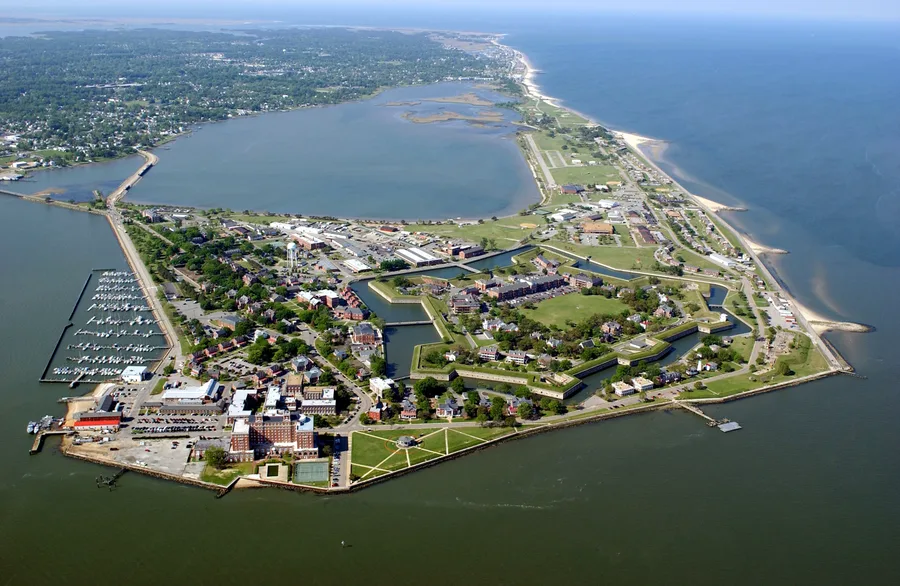
Overview
Fort Monroe, at Old Point Comfort, Virginia, is the largest stone fort by area ever built in the United States, completed in 1834 to guard the water approaches to Chesapeake Bay — but its most consequential role in American history had nothing to do with coastal artillery. Although Virginia joined the Confederacy, Fort Monroe remained in Union hands throughout the Civil War, a strategic anomaly that turned it into the site of one of the war’s most important, and most overlooked, turning points for enslaved people seeking freedom.
A Site Defended Since Jamestown
The strategic value of Old Point Comfort was recognized almost immediately by English colonists: Captain John Smith and the Virginia Company, having founded Jamestown in 1607, built the wooden Fort Algernourne on this exact site by 1609 to guard the approach to their new colony, beginning more than two centuries of continuous fortification before the present stone fort’s completion in 1834. The modern 565-acre site today preserves 170 historic buildings alongside roughly 200 acres of natural shoreline, wetlands, and submerged lands — physical continuity stretching from the earliest days of English colonization in North America to the Civil War turning point that unfolded on the same ground centuries later.
“Freedom’s Fortress”
On May 27, 1861, just weeks into the war, Major General Benjamin Butler ruled that enslaved men who reached Union lines at Fort Monroe would be treated as “contraband of war” — seized enemy property — rather than being returned to their enslavers under the still-standing Fugitive Slave Act, a decision known as the Fort Monroe Doctrine. The ruling triggered an immediate, massive response: thousands of enslaved people fled to the fort seeking freedom, and it became known as “Freedom’s Fortress,” the place where any self-emancipating person who reached it would be free. When Harry Jarvis reached the fort that summer and demanded to enlist, Butler initially refused, saying it “wasn’t a black man’s war” — to which Jarvis replied, “It would be a black man’s war,” a reply the arriving flood of freedom seekers would soon prove right.
Legacy
Congress formalized the contraband policy into law in March 1862, and by that fall the Army had built the Great Contraband Camp near the fort — the first of more than 100 such camps established by war’s end — while, beginning in January 1863, many contrabands enlisted directly in the newly formed United States Colored Troops, which grew to nearly 180,000 soldiers. Mary S. Peake, teaching freedmen’s children to read and write near the fort, became the first Black teacher hired by the American Missionary Association, adding an educational legacy to the fort’s role as the literal starting point of the wartime emancipation process — a single decision at one Virginia fort that reshaped Union policy toward slavery for the rest of the war.
Related
More in Civil Rights, Military