Harlem Renaissance
Apollo Theater
theater and music venue in Harlem, New York City
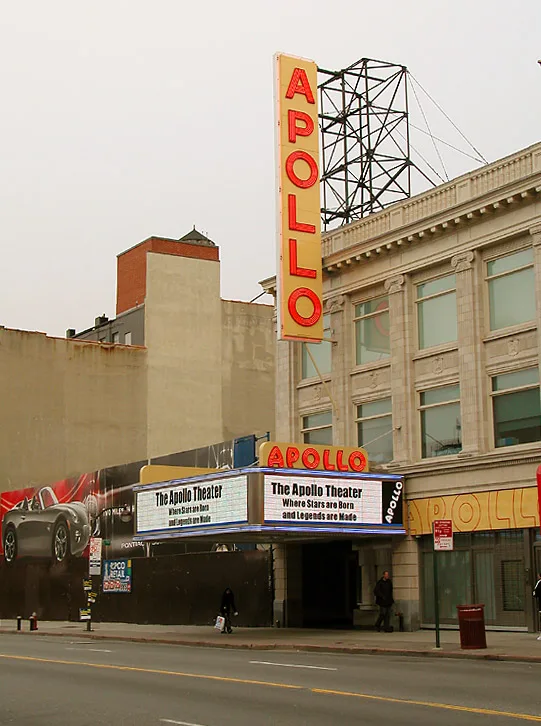
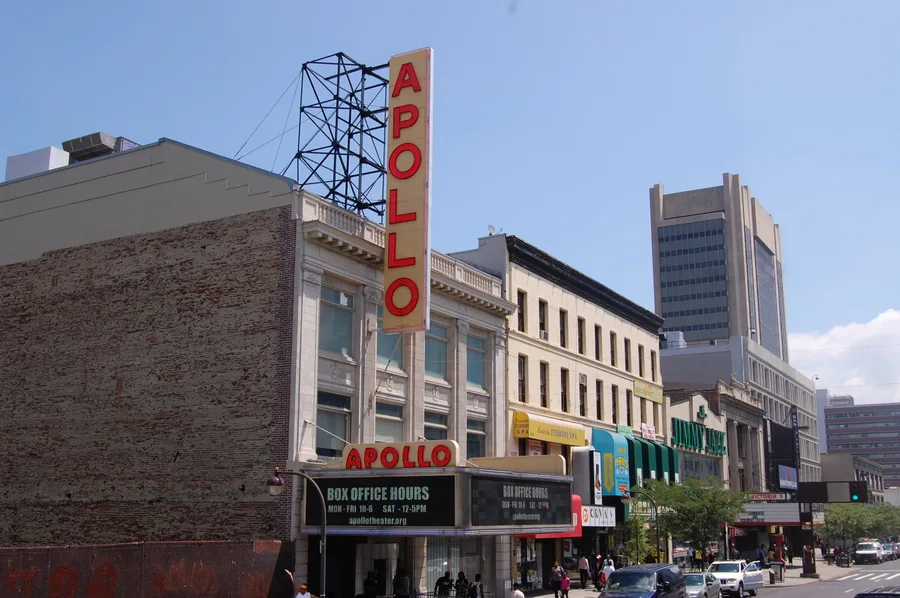
Overview
The Apollo Theater, at 253 West 125th Street in Harlem, is one of the most storied venues in American music history, a roughly 1,500-seat theater designed by George Keister in a neoclassical style that has served as a defining stage for Black American performers for nearly a century. The building’s own history carries an uncomfortable irony: developed in 1913 by producers Jules Hurtig and Harry Seamon as a burlesque venue, it originally served only white patrons, a policy that only changed after Sydney Cohen acquired the theater in 1934 and transformed it into a venue built for and centered on Black performers.
Amateur Night and a Launchpad for Legends
Under the Schiffman family’s management from 1935 to 1976, the Apollo became the essential proving ground of Black American music and performance, its long-running Amateur Night at the Apollo — a weekly show where the audience itself judges each novice performer — becoming one of the most consequential talent showcases in American entertainment history, helping launch the careers of countless major artists who are honored in the theater’s own hall of fame. The theater changed hands several times in subsequent decades, including a period of Black ownership by a group of Black businessmen from 1978 to 1979, before former Manhattan Borough President Percy Sutton purchased it at auction in 1981 and oversaw its major 1985 refurbishment.
A Landmark Building on 125th Street
The theater sits on an irregular Harlem lot spanning roughly 17,450 square feet, with entrances facing both 125th and 126th Streets, and its neoclassical facade, designed by George Keister — the same architect behind the Belasco Theatre and several other Broadway-era houses — has been renovated multiple times while preserving its original three-story front. The building’s landmark status, on both the facade and its interior, formally protects a structure whose modest architectural pedigree belies its outsized cultural impact.
Legacy
Since 1991, the Apollo has operated under the nonprofit Apollo Theater Foundation, following its acquisition by the New York State Urban Development Corporation, and the theater has continued to expand and renovate into the 2020s, including new recording studios and additional performance spaces. As the home of the long-running television show Showtime at the Apollo and a designated New York City landmark listed on the National Register of Historic Places, the Apollo remains a living, actively operating institution rather than a historical relic — a stage that Black performers built into a national cultural landmark after being excluded from it altogether.