1863–1877
Reconstruction Era
era after American Civil War (1865–1877)
Overview
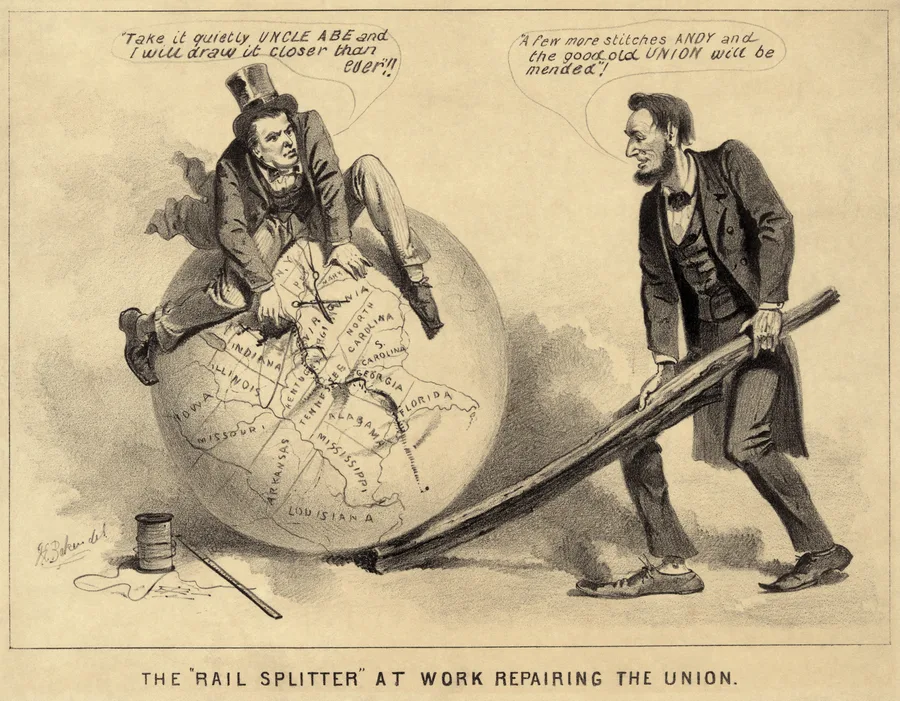
Reconstruction (1865–1877) was the period following the Civil War in which the United States grappled with abolishing slavery nationwide, readmitting the former Confederate states, and, for the first time, extending citizenship and civil rights to millions of newly freed African Americans. Three constitutional amendments — the Thirteenth, Fourteenth, and Fifteenth — were ratified during this period, abolishing slavery, guaranteeing birthright citizenship and equal protection under the law, and prohibiting racial discrimination in voting rights, respectively: the most significant expansion of American civil rights in the nation’s history to that point.
Unprecedented Black Political Power
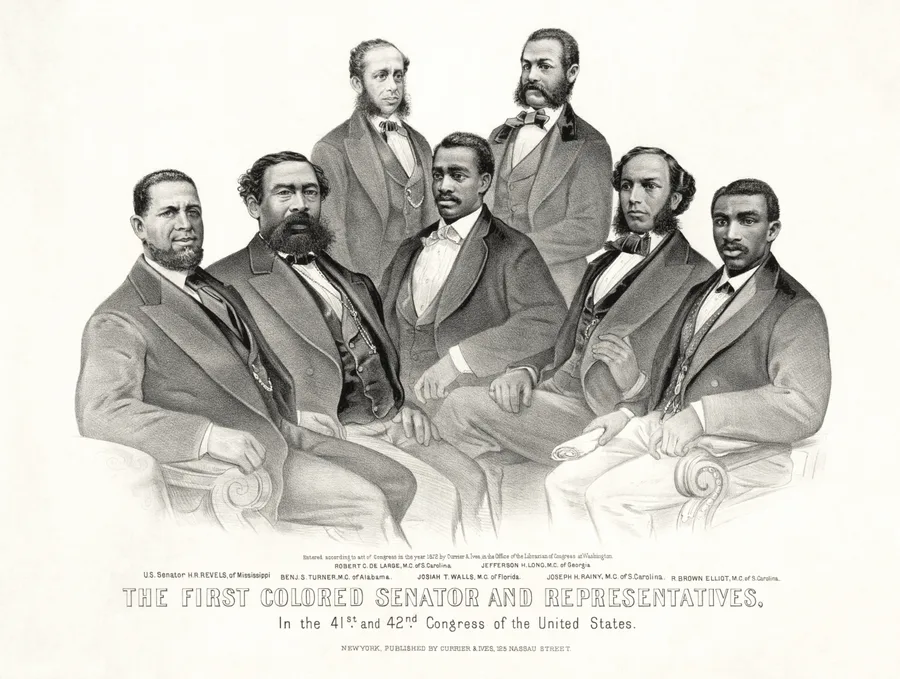
Reconstruction produced a genuine, if brief, era of interracial democracy in the South: new state constitutional conventions extended the vote to Black men, and coalition governments made up of freedmen, sympathetic white Southerners, and Northern transplants took power across the former Confederacy, electing African Americans to state legislatures, statewide offices, and the United States Congress for the first time in the nation’s history — a wave of Black political leadership this site profiles directly through figures including Hiram Revels, Blanche K. Bruce, and Robert Smalls, among others. The U.S. Army played a direct role in protecting these gains, helping establish a free labor economy and building schools and churches for formerly enslaved communities alongside the newly created Freedmen’s Bureau, which provided food, shelter, and education to millions of freedpeople.
Backlash and Compromise
This progress faced immediate, organized, violent opposition: white paramilitary groups, including the Ku Klux Klan, White League, and Red Shirts, waged sustained terrorism against Black voters and officeholders in an explicit campaign to restore white political control, prompting Congress under President Grant to pass the Ku Klux Klan Act and the Civil Rights Act of 1875 to fight back. But Northern political support for Reconstruction’s enforcement steadily eroded under the strain of continued Southern resistance and cost, and the disputed, Black-voter-suppressed 1876 presidential election ended in the Compromise of 1877: Republican Rutherford B. Hayes was awarded the presidency in exchange for withdrawing federal troops from the South, a bargain historians generally mark as Reconstruction’s true end. Federal enforcement of Black civil rights in the South effectively ceased entirely in 1890, when the Lodge Bill failed in Congress.
Legacy
Reconstruction’s formal end in 1877 opened the door to the Jim Crow era detailed on its own page on this site, but its achievements were not erased: the constitutional amendments it produced remained the legal foundation the 20th-century Civil Rights Movement would later use to dismantle segregation, and the documented fact of Black Americans governing effectively at every level of government during Reconstruction stands as direct, historical refutation of the racist claims used to justify disenfranchising them afterward. Historians continue to debate Reconstruction’s broader legacy, including whether federal policy toward freedpeople was adequate and whether the treatment of former Confederates was, by contrast, too lenient — an ongoing scholarly conversation this site notes rather than resolves definitively.
Related entries
More in Civil Rights, Politics